Commuter Project
In 2006, I installed a wireless Crestron touchscreen in a conference room of a family office, in order to simplify video switching for the conferencing system. Shortly after, the client's IT team asked if I could do something similar for a vehicle.
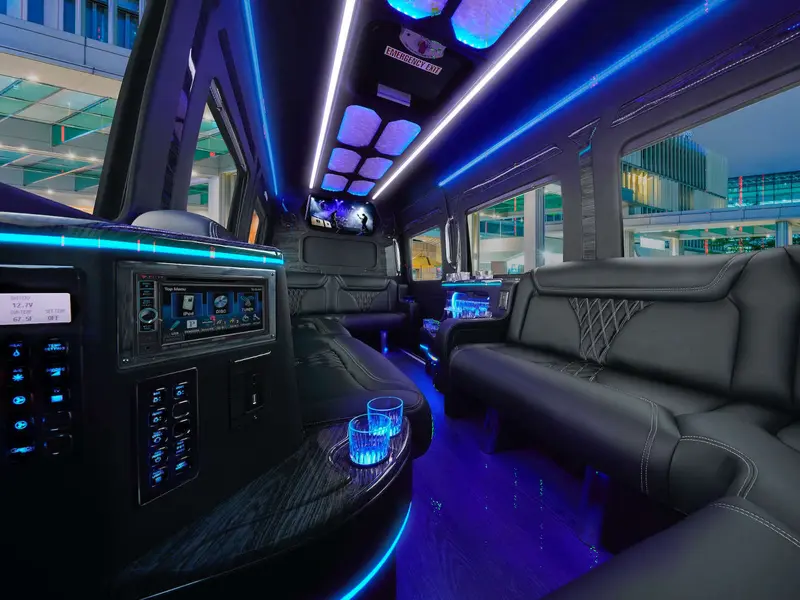
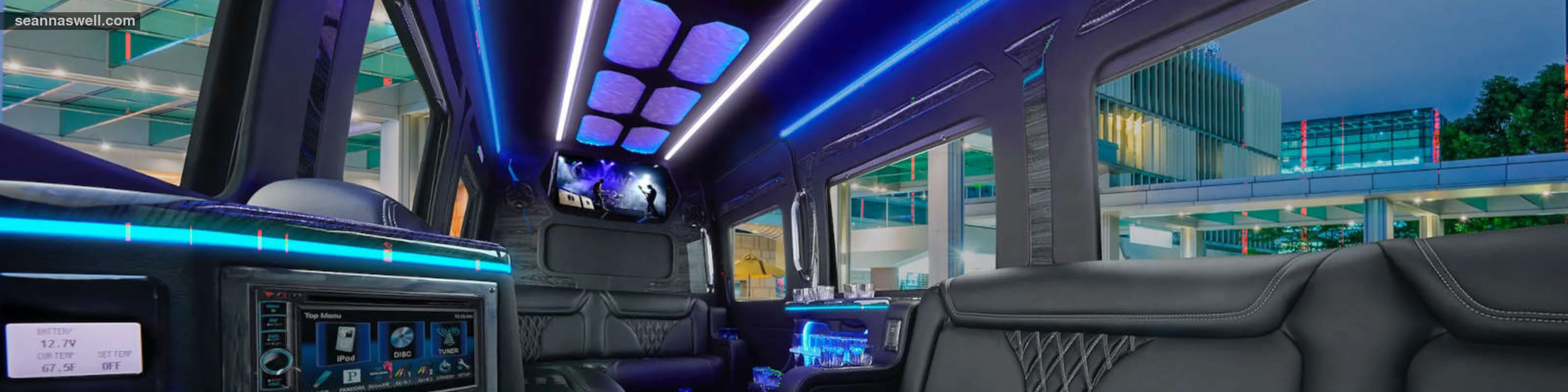
The client spent significant time in traffic each day and wanted to make that time productive, so they had purchased a Mercedes Sprinter limousine. It came equipped with an entertainment system and Crestron touchscreen remote controls integrated into captain's chair arm rests, but the touchscreen interface was cumbersome to operate. They asked me to redesign it from scratch with emphasis on computer and TV switching rather than entertainment features.
The programming work was straightforward, but what caught my attention was the lighting system. Residential lighting is typically simple, a couple of scenes per room and a dim function covers 95% of use cases. However, this vehicle had numerous independent lighting zones that could be configured in many different ways depending on the activity.
That project was my first experience with vehicle lighting control, and it stayed with me. Years later, when I began researching OLED solid-state lighting technology, I remembered that Sprinter and realized that automotive (and motorcoach, and marine) lighting could benefit from the advantages OLED provides. LED currently dominates the automotive lighting market, but that may not remain true much longer.