What follows is a summary of the long and winding path that led to where I am now, and it started when I dropped out of an Electrical Engineering program. I went on to spent 15 years working in the electronics industry, working my way from entry-level positions to designing and managing complex automation systems for high-end residential and commercial clients.
(1991-1994) Highlighters and Depositions
My career started at an international corporate law firm, where I began as a clerk ordering supplies and keeping the supply rooms on each of the floors stocked with legal pads, a colorful assortment of pens and post-it notes, and endless reams of printer and copier paper. Later I moved into helping the IT department with computer maintenance and the AV department with video editing.
Then, I was assigned to a special project which ultimately shifted the direction of my life. For nearly a year I reviewed highlighted deposition testimony and edited video footage, sometimes into the wee hours of the morning, ultimately collaborating with a local company to create indexed Laser Disc presentations, which was state of the art technology at the time. The culmination of that project was traveling to Orange County to help produce a mock trial organized by a consulting firm headed by psychologists. I worked with the convention center staff to coordinate our Audio Video needs, and ran the equipment that presented the footage I had created to several audiences of mock trial participants. At the end of the week long event I received a letter of recommendation from the head of the consultancy for my efforts, which seemed like a good way to end my time at the firm.
Those years allowed me to develop the discipline and interpersonal skills that became essential throughout my working life, but after nearly three years commuting to downtown from the suburbs to work in a corporate environment, I was ready for something completely different...
(1994) Self Reliance
At the Houston Public Library, I discovered the Directory of Intentional Communities. After a few months of correspondence, I sold my car, bought some camping gear, and planned a summer road trip with two adventurous friends.
We rented the largest Oldsmobile we could find and set out for Colorado. For two weeks we hiked and camped at Rocky Mountain National Park, Yellowstone, the Tetons, and the Grand Canyon. Then my friends returned to Houston after dropping me off at the Reevis Mountain School of Self Reliance, my new home.
For the next 5 months I lived without phones, electricity (except minimal solar), or modern distractions. I watered fruit and nut trees, weeded an acre of organic vegetables, picked grapes, cleaned up after chickens, and learned to make surprisingly good carob brownies. It took a while to adjust to that kind of life, but at the end it was hard to leave.
On the long drive back to civilization, I debated my next move: accept an invitation to Harbin Hot Springs' work exchange program, or return to Texas as an AV technician. By the time they dropped me at the Greyhound station in Apache Junction, I had made my decision.
(1995-1996) Hospitality
The behind-the-scenes world of hotels and conference centers was thoroughly enjoyable. As an AV technician, I set up microphones and mixers, video and slide projectors, flip charts and whiteboards, but what interested me most were the events themselves.
I learned that pharmaceutical companies and MLM franchises use very similar techniques to motivate their sales people. And, I also saw firsthand the planning and coordination required to execute even a modest sized event. During that time I was also introduced to Windows 95, as presenters constantly needed help formatting documents and connecting computers to video projectors.
The convention center experience was both interesting and relatively uneventful, but was valuable preparation for what came next.
(1996-2001) Apprenticeship
After a year in hotel AV work, I found an entry-level position at a home theater company ten minutes from where I lived, and took a pay cut to learn the industry.
For the first few months I worked as manual labor, then moved into the warehouse managing inventory and scheduling. Over the next five years, I went on to set up and manage the internal computer network, became certified in Panasonic PBX systems, Lutron Homeworks lighting systems, and Crestron automation systems, and became the resident ISF certified Sony CRT projector calibrator.
Essentially I did everything required to run a 30-person electronics installation company: programming, project management, system design, proposals, and sales. In addition, I participated in the process of selecting and implementing the CRM and ERP system. This period amounted to what would traditionally be called an apprenticeship, learning by working directly with experienced professionals, developing a variety of skills while solving real world problems.
Eventually an opportunity to partner with someone who ran a two-man company with access to funding but limited experience managing large high-end projects presented itself. It was a hard decision, but the opportunity to be a partner in a new venture was too good to pass up.
(2001-2003) Three Amigos and Two Trucks
We were three partners in our late twenties, and despite our age, were able to achieve a significant amount in a short period of time. We engaged an attorney, set up a new company, secured a $50k line of credit, bought a second service van, and signed a three-year lease on office/warehouse space we felt confident showing to vendors and clients.
We recruited a contract electrician and the office manager from my previous employer, ensuring we had experienced administration and on-staff help for lighting projects. Then we remodeled the space, replacing fluorescent fixtures with recessed cans and dimmers, running network and audio/video cabling throughout. We had a logo, letterhead, business cards, and website designed, lettered both service vans and set up a phone system with after-hours emergency rollover to mobile phones.
Due to my previous relationships with Panasonic, Lutron Lighting, and Crestron sales reps, plus a substantial deposit from a previous client who needed all three product lines in their new home, we became dealers for all three manufacturers quickly.
Eighteen months in, we were seven talented people under 40 who had gained the trust of high-end builders, architects, and notable clients in the Dallas-Fort Worth area. We had covered operating expenses and payroll without additional funding, had over $1M of scheduled business in various stages of completion, and there were more projects coming.
However, over time conflicts developed between partners, as scheduling delays exposed irreconcilable differences in operating philosophy. It was a difficult decision, but ultimately it became clear the best path forward was for me to leave, so I trusted my intuition and took another leap into the unknown.
(2003-2009) Independent Contractor and Consultant
There was no downtime after leaving, as a previous client was building a new home asked me to handle their AV and security systems. Within a month I had a deposit on a $150k project, and was able to hire two technicians who left my ex-partners for both that project, and another for Lockheed.
As things were wrapping up a Crestron sales rep called asking if I could help a dealer in Austin. It started with programming a whole-house Crestron system for a retired Dell executive and kept going from there, with travel to Austin for programming work becoming so frequent that for about a year I kept apartments in both Arlington and Austin.
Ultimately I relocated to Austin full-time, and kept meeting people who needed help. Over the next six years, I worked as a contract programmer and consultant to several Audio Video companies, and worked directly for residential and commercial clients:
Programmed and implemented the Crestron interface to the security, camera, and access control systems at the Texas Governor's Mansion in downtown Austin
Programmed and implemented whole-house automation at the Austin home of a US Congressional Representative
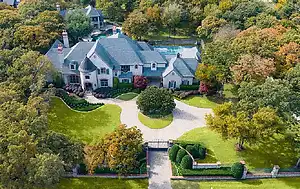
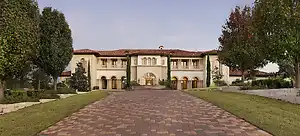
Designed and managed installation of automation, lighting, telephony, gate entry, and audio-video systems for a 24,000 sq. ft. residence outside Austin
Obtained a Canadian work visa to complete multiple Crestron projects in Vancouver, including a system aboard a 55-foot motor yacht
Worked in homes that could have been, and in some cases were, featured in Architectural Digest
Managing large projects with a lot of moving parts usually involves long lead times, endless meetings, and inevitable scheduling delays. But the payoff was always seeing the design come to life, and watching people enjoy the finished system.
However, one Sunday afternoon I found myself debating whether to accept another project. It implied a multi-year commitment, and I realized I felt burned out. Despite spending my working days in homes that could be (or in some cases were) in Architectural Digest, I'd been going nearly non-stop since 1996.
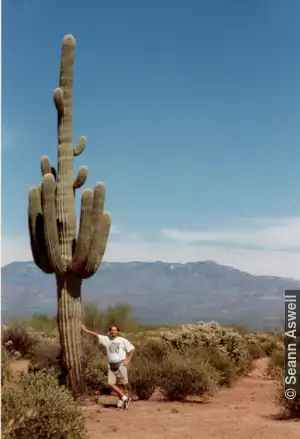
I reflected on my time in the Arizona desert fifteen years earlier, living in a yurt, watching sunsets, listening to the nearby creek, and knew it was time for a change. After a brief search and a long weekend in North Carolina, I found a remote writer's cabin outside Asheville. In August 2009, my dog and I left Austin for the Blue Ridge Mountains.
(2009-2025) Personal Projects
I left Austin for a mountain cabin intending to write a book, but it turned into something I could not have anticipated. That journey ultimately took me to California, Canada, Guatemala, China, Taiwan and Thailand.
After the initial research which resulted in We Meet Again, my focus shifted for several year to refining the design of several consumer electronics products. The original idea came after visiting the home of Lin Yutang in 2014, while living in Taiwan. He is known for his writing, but he also invented a Chinese language typewriter, which is the inspiration for a new series of human input devices. The research and technical design associated with those devices, along with a few other projects, required much time and effort over the last 10 years.
During this period:
Lived in California (2010-2012)
Lived in Thailand, Taiwan, and Canada (2012-2017)
Designed a series of human input devices inspired by Lin Yutang's Chinese typewriter
Developed the conceptual model for what I call the Personal Server
Remodeled a 34-foot Airstream travel trailer for full-time travel and explored the Western US (2018-2021)
In November of 2025 I began an unsuccessful search for OLED lighting for a personal project, which led to asking a question: why is no one manufacturing flexible OLED lighting in North America? It took several months but I was able to answer the question, and that has resulted in a new venture. What started as a personal need, revealed an opportunity that I wasn't looking for, but now feel an obligation to pursue. The process thus far has involved:
Manufacturing processes: vacuum thermal evaporation, roll-to-roll, and sheet-to-sheet slot-die deposition
Equipment and suppliers: coating equipment, substrate and material options, encapsulation
Facility research: site selection, consultations with civil engineers, and financing structures
Engaging industry advisors: OLED veterans, manufacturing, and architectural lighting
Things are moving quickly, and I'll share more publicly as things develop. If you've been directed here in connection with that venture, the materials you've received cover the business, and this page covers me.